Sales down by 9% as mortgage rates hit a 3-year high
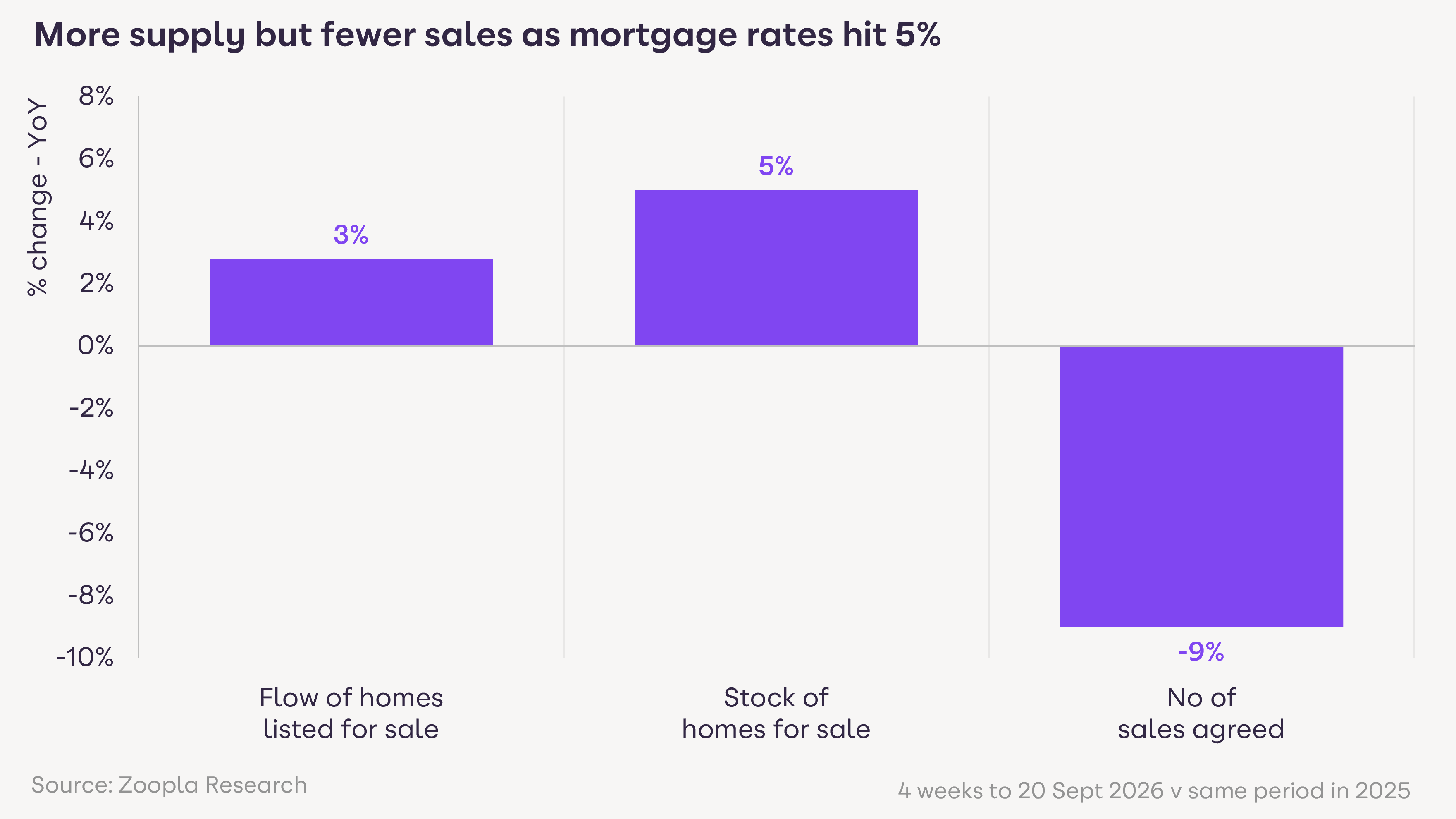
Financial pressures continue to affect the sales market. Borrowing costs are at their highest rate for three years, up from 4% at the start of the year to 5.2%.
The average homebuyer now spends an extra £150 a month on mortgage repayments (£1,800 a year). This is causing people to put their moving plans on hold, or wait longer until a home within their budget becomes available.
The result of these factors constraining buyer activity is 9% fewer sales agreed when comparing this year to last. Although borrowing costs are likely to remain high, we expect house prices to increase 0.5% by the end of the year. Despite these conditions, we’re still on course for annual sales to be close to 1.1 million.
The North-South house price split continues
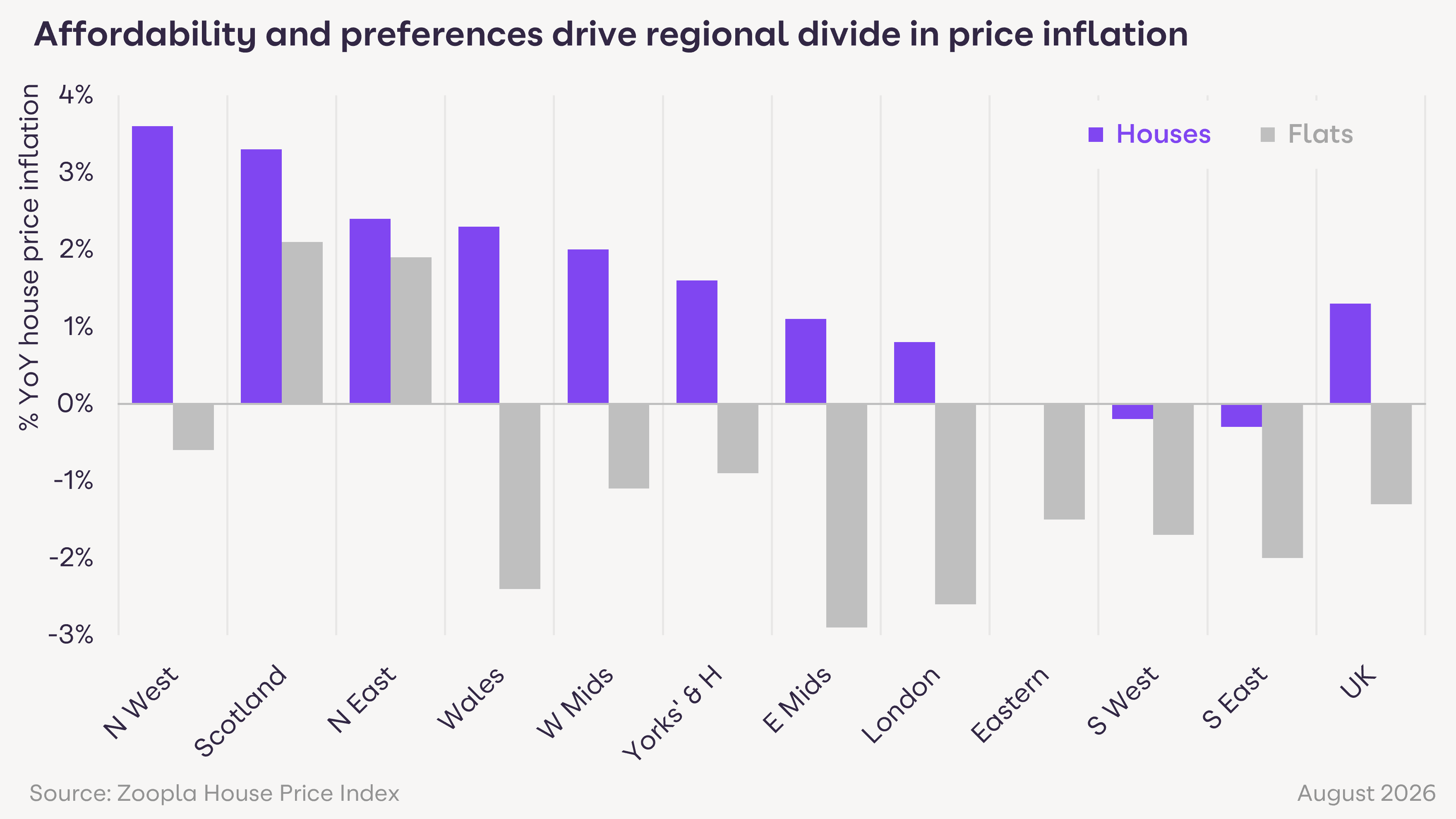
Our data shows above-average annual house price inflation in Northern Ireland (+6.3%), the North West (+3.1%), Scotland (+2.6%), the North East (+2.3%), Wales (+1.8%), the West Midlands (+1.6%) and Yorkshire and the Humber (+1.4%).
Cities in these regions are also outperforming their southern counterparts. For example, house prices in Belfast increased 5% in the last year, followed by Liverpool (+4.3%), Newcastle (+2.7%) and Glasgow (+2.6%).
It’s a different story in the south. House prices have fallen in London (-1%), the South East (-0.7%), the East of England (-0.3%) and the South West (-0.3%). The only exception was the East Midlands, where annual house price inflation is +0.6%.
Of the six UK cities where house prices are falling, five are in the south: Bristol, Portsmouth, Oxford, Cambridge and Bournemouth. Bournemouth remains at the bottom of the city table, with annual house price deflation of -2.1%.