Insights
28 October 2026

Autumn Budget 2026: what the property market needs to know

Richard Donnell explores the Autumn Budget’s key housing measures, from support for first-time buyers and housebuilding to higher taxes on property income, and what estate agents and housebuilders need to know.

Richard DonnellExecutive Director – Research

Key takeaways

  • Your First Home could boost demand for new-builds, with the government expecting the £4.7bn scheme to support around 70,000 first-time buyers and 20,000 new homes, while Zoopla estimates that up to 30,000 buyers a year could benefit if local price caps are set at the right levels.

  • A new First Time Buyer ISA will launch in 2029, offering a 25% government bonus on savings used to buy a qualifying first home worth up to £450,000.

  • Landlords face a further increase in property income tax, with rates rising by another two percentage points from April 2027, on top of the increase announced in the 2025 Budget.

  • Housebuilders and social housing receive additional support, including £1.5bn for around 10,000 additional social and affordable homes and an exemption from Biodiversity Net Gain requirements for qualifying small brownfield developments.

  • Estate agents need to focus on local market conditions, with 7% more homes for sale and sales agreed down 7% year on year making realistic pricing and evidence-led advice increasingly important.

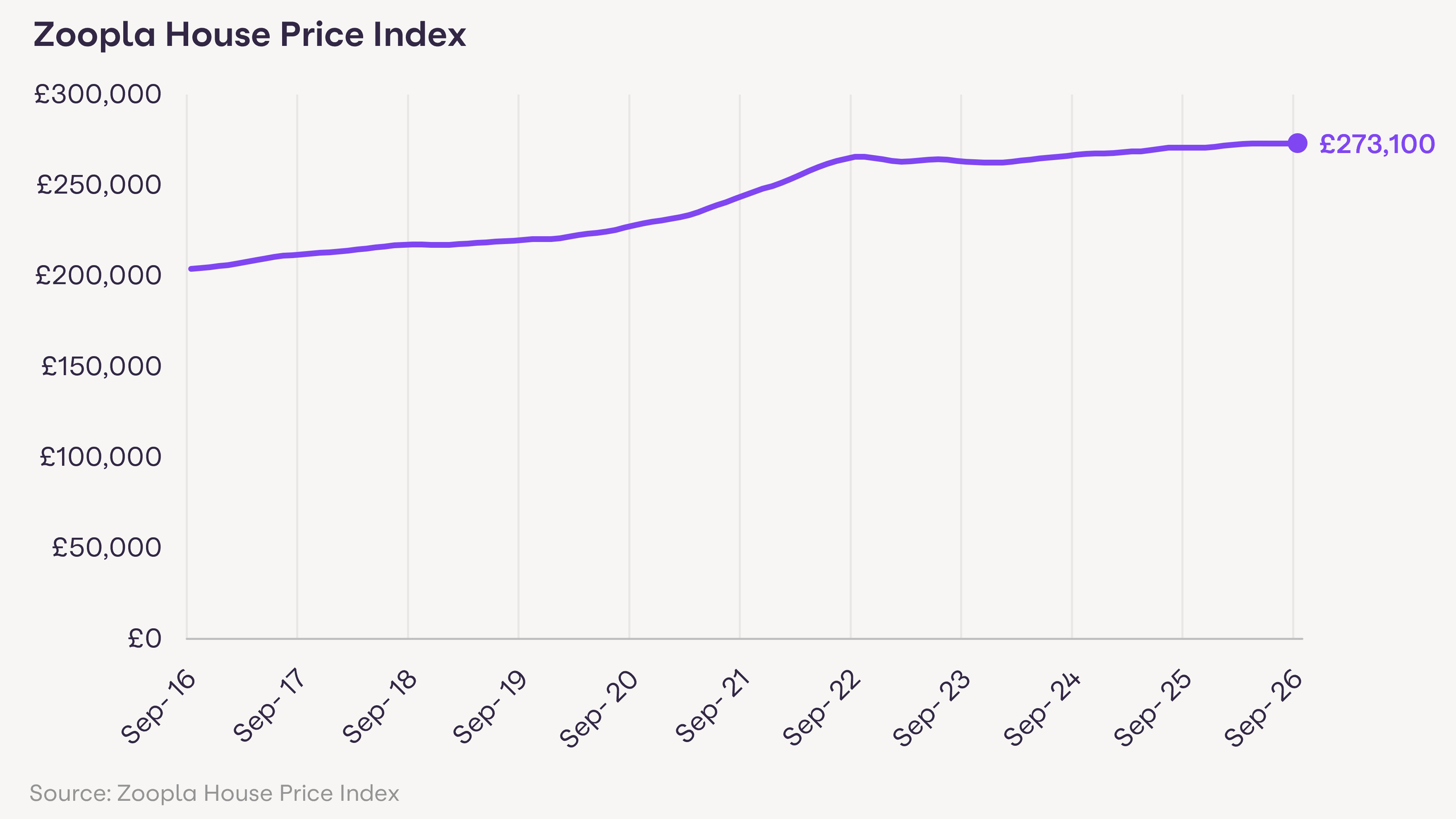
The Autumn Budget comes at a challenging time for the housing market. Our latest House Price Index found that UK house prices rose by 0.8% in the year to September, but sales agreed were down 7% year on year and the number of homes for sale was up 7%.

Chart showing UK house price growth over the last 10 years to September 2026, from the Zoopla House Price Index

More than a third of homes are in postcode areas where prices are falling, rising to 85% in London and the South East.

Against this backdrop, the Budget has introduced measures aimed at helping first-time buyers, supporting housebuilders and changing the tax position for landlords. Here’s what the announcements could mean for the property market.

Your First Home scheme: a boost for housebuilders and first-time buyers

The government has announced £4.7bn of government-backed lending for the Your First Home scheme, with pre-registration expected to open by the end of December 2026, full applications from February 2027 and the first loans from April 2027. The scheme will help eligible first-time buyers purchase new-build homes with a 2.5% deposit, supported by a 20% government-backed equity loan.

Eligibility will depend on household income and local property price caps. The income cap is £110,000 outside London and £140,000 in London, with price caps based on local authority median prices. The scheme also includes a five-year interest-free period on the equity loan.

Zoopla estimates that, if local property price caps are set at levels that reflect what first-time buyers want to pay, more than a third of new homes could be eligible. Up to 30,000 first-time buyers, or around 1 in 10, could benefit each year.

Zoopla saw an immediate 40% increase in searches for new homes when the scheme was first announced ahead of the party conferences. This suggests there is buyer appetite for support, although the scheme’s impact will depend on the final eligibility criteria and how many homes qualify.

The scheme is expected to cost around £1.5bn a year, meaning the £4.7bn announced could fund around three years of support. This is Zoopla’s estimate rather than a confirmed government commitment on the scheme’s duration. For housebuilders, it could help stimulate demand for new homes at a time when higher borrowing costs are making buyers more cautious.

With 670,000 Zoopla users categorised as first-time buyers, we’re building filters and tools to help match them with eligible new homes, starting with our Your First Home scheme hub.

First Time Buyer ISA to replace the Lifetime ISA

The Chancellor has announced that a new First Time Buyer ISA will be introduced from April 2029, replacing the Lifetime ISA for new savers. Existing Lifetime ISA holders will be able to continue under the current rules. From 29 October 2026, the withdrawal charge for existing holders buying a qualifying first home priced above £450,000 will fall from 25% to 20%, protecting their original contributions.

The new ISA will allow savings of up to £4,000 a year, with a 25% government bonus on withdrawals used to buy a qualifying first home worth up to £450,000. The maximum bonus will be £20,000, and there will be no upper age restriction.

Further detail on how the new ISA will work will be important in understanding how it compares with the existing scheme and what it means for first-time buyers saving for a deposit.

Changes to tax on rental income

The Budget introduces an additional 2% tax on rental income, which could further reduce returns for landlords who own properties in their own name.

From 6 April 2027, property income tax rates will rise by a further two percentage points, taking the basic rate to 24%, the higher rate to 44% and the additional rate to 49%. This is on top of the increase announced in the 2025 Budget.

Zoopla’s rental market analysis shows that average rents have risen from £1,008 to £1,350 a month over the past five years, an increase of 34%. While rising rents have helped offset higher operating costs, additional tax could put further pressure on landlords’ net returns and influence decisions about whether to buy, sell or continue letting a property.

The impact may differ depending on how a property is owned, including whether it is held personally or through a limited company. Landlords should seek professional tax advice to understand the implications for their individual circumstances. It will also be important to monitor how the changes affect the supply of homes available to rent.

Support for housebuilders and social housing

The Budget also includes measures aimed at reducing costs for builders and increasing funding for social housing, alongside incentives to encourage the release of land for social housing development.

It provides an additional £1.5bn for the Social and Affordable Homes Programme, expected to deliver around 10,000 additional homes. The Budget also exempts qualifying residential brownfield developments of up to 1.5 hectares in England from Biodiversity Net Gain requirements, with an implementation timeline still to be published.

These measures could help support housing delivery and affordability over the longer term. Their impact will depend on the detail of how the support is structured, how quickly it can be delivered and whether it leads to more homes being built.

What the Budget means for estate agents

The Budget may prompt questions from buyers, sellers and landlords, but agents will need to interpret the changes in the context of their local market.

Our latest House Price Index shows that the number of homes for sale is 7% higher than a year ago, while sales agreed are down 7%. With buyers facing higher mortgage costs and more choice, setting realistic asking prices and supporting valuations with local evidence will be particularly important.

Keep clients informed. Explain confirmed Budget changes clearly, including what the new homebuying scheme means for eligible first-time buyers and how the rental income tax changes could affect landlords. Refer clients to qualified advisers for personal tax advice.

Use local data to support pricing conversations. National trends can mask significant differences between areas. Use ZooplaPro tools, including Market View where relevant, to bring local market evidence into valuation discussions and help sellers understand how their property compares with competing homes.

Keep listings accurate and share useful updates. Check property details and any references to homebuying schemes against the confirmed eligibility rules. Share relevant Budget information through your website and social channels, helping clients understand what has changed without overstating its likely impact on prices or demand.

In a market where buyers have more choice, agents who combine clear communication with realistic, evidence-led advice will be best placed to build trust and keep transactions moving.

Ready to get ahead?

Every 1.5 seconds a mover connects with an estate agent or housebuilder on Zoopla. See how your business can win with us.

We try to make sure that the information here is accurate at the time of publishing. But the property market moves fast and some information may now be out of date. Zoopla accepts no responsibility or liability for any decisions you make based on the information provided.

Related articles

What today’s sellers really want from their estate agent

17 Nov 2025

Our new research shows that while the industry may be busy polishing its automation tools, sellers are gently reminding everyone that property decisions are still deeply personal - although this does vary across groups of consumers.

Read more
Richard DonnellExecutive Director – Research
Largest sales pipeline for 4 years

A £100bn opportunity: recovery in sales market drives strongest pipeline in 4 years

29 Oct 2025

The UK sales market has registered a strong recovery over the last two years, with agents now managing the largest sales pipeline since 2021.

Read more
Richard DonnellExecutive Director – Research